 Reliable Shopping
 Free and Fast Shipping
 Quality Product
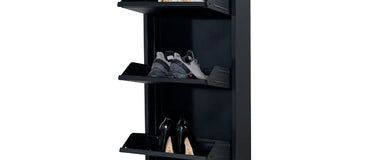
Quick answer: Metal shoe cabinet or wooden cabinet? Discover why a metal shoe cabinet could be the smarter choice for busy UK hallways, from damp wellies and muddy trainers to limited space and everyday storage.
If your hallway floor disappears under trainers, wellies and school shoes every evening, chances are your entryway is doing more work than it was built for. Most UK homes just don't have room for a big, bulky wardrobe by the front door, which is exactly why a narrow shoe cabinet has become the go-to fix for small entryways up and down the country.
But once you start looking, the choice isn't just about size. It's also about material, and that's where a lot of people get stuck between a metal shoe cupboard and a traditional wooden cabinet. Here's everything worth knowing before you buy, in simple terms.
Why a slim shoe cabinet makes sense for hallways
British hallways are famously tight. A few feet of wall space is often all you get, which is why a shoe cabinet for hallway use needs to be slim by design, not just small in a general sense. Most slim shoe cabinets sit around 15–20cm deep, so they hug the wall instead of eating into your walking space.
Look for flip-down drawer fronts rather than open shelving if you want things to look tidy. Flip-down doors close flush against the cabinet, so shoes, muddy trainers and all stay completely out of sight. It also means a narrow shoe cabinet can hold far more than it looks like it should. Most slim models comfortably store 8 to 15 pairs across a few tiers.
Metal vs wood: which handles a UK hallway better?
This is the bit most buying guides skip over, and it matters more than colour or style.
Wood looks warm and classic, but it has a weakness: UK hallways get wet. Umbrellas drip, wellies track in rain, and coats shed moisture straight onto the floor below. Over time, that dampness causes wooden cabinets to swell, warp, or develop a musty smell nobody wants near their front door.
A metal shoe cupboard sidesteps that problem entirely. Powder-coated steel resists moisture, doesn't swell, and wipes clean in seconds if a wet boot leaves a mark. It's also lighter than most people expect, so moving or repositioning it isn't a two-person job. For busy, damp entryways, metal wins, and it's why so many UK buyers are moving away from MDF furniture near the front door altogether.
|
Factor |
Metal |
Wood |
|
Moisture resistance |
High powder-coated steel resists damp |
Low swelling and warping over time |
|
Weight |
Light, easy to reposition |
Heavier, harder to move |
|
Maintenance |
Wipes clean in seconds |
Needs periodic care/refinishing |
|
Lifespan in a damp hallway |
Long |
Shorter, can develop a musty smell |
|
Style |
Modern, minimal |
Warm, traditional/cottage look |
|
Best for |
Damp, high-traffic entryways |
Dry entryways, period-style homes |
Colours and design for a modern hallway
Most metal shoe cabinets come in three finishes: black, white and grey. Black works well against light walls and gives a modern hallway a bit of contrast. White keeps a small entryway feeling bright and open, handy if your hallway doesn't get much natural light. Grey sits in between and suits almost anything, from Scandinavian-style homes to more traditional interiors.
A cabinet like the Gordion 3-Drawer Metal Shoe Cabinet shows how a simple, flat-fronted design can slot into almost any colour scheme without fighting for attention. Since your metal shoe cabinet is often the first thing visitors see, it's worth picking a finish that matches your front door or flooring rather than just going with whatever's cheapest.
Where to position your shoe cabinet
Placement matters as much as the cabinet itself. The best spot is usually directly beside the front door, and the cabinet must be securely wall-mounted rather than used freestanding. This keeps the floor completely clear and helps make the hallway feel bigger than it is. Wall mounting provides essential stability and helps prevent the cabinet from tipping, particularly in busy family homes where children may frequently open and close the drawers.
If wall space is tight, a compact option like the Olympos 2-Drawer Metal Shoe Cabinet tucks under the stairs or behind a door just as well, as long as it stays shallow enough not to block the walkway.
What to look for before you buy
Whether you're comparing metal or a wooden alternative, a few features matter more than looks:
- Shoe size compatibility: check the maximum shoe size the cabinet can accommodate. Atahome shoe cabinets fit men’s shoes up to UK size 8.5 in the standard configuration. For larger shoes, trainers, or boots, remove the internal plastic straps or place footwear sideways for extra space.
- Rust resistance: look for powder-coated or rust-resistant steel, especially if your hallway gets damp.
- Capacity vs footprint: check how many pairs it holds per tier, not just the overall size.
- Drawer mechanism: simultaneous flip-down drawers are quicker to use daily than individual doors.
- Wall-mounting hardware: confirm it's included, since drilling extra holes yourself is a hassle.
For a small flat or a shared student house, the Olympos 2-Drawer above is a solid, no-fuss pick. Families needing more room tend to prefer the Gordion 3-Drawer, which adds an extra accessory drawer for laces, polish, or umbrellas. And if you've got a bigger household with a serious shoe collection, the Lydia 5-Drawer Metal Shoe Cabinet holds up to 15 pairs without taking over the hallway. Many customers choose to place multiple metal shoe cabinets side by side along the hallway, creating a practical and cohesive storage solution.
Final thought
A hallway doesn't need to be big to be organised. The right narrow shoe cabinet, picked for your space rather than just your budget, can turn a cluttered entryway into the tidiest room in the house. Once your shoes are sorted, it's worth glancing at the rest of your entryway too; a matching Storage Cupboard can tidy away coats, bags and everyday clutter using the same durable metal build.
